
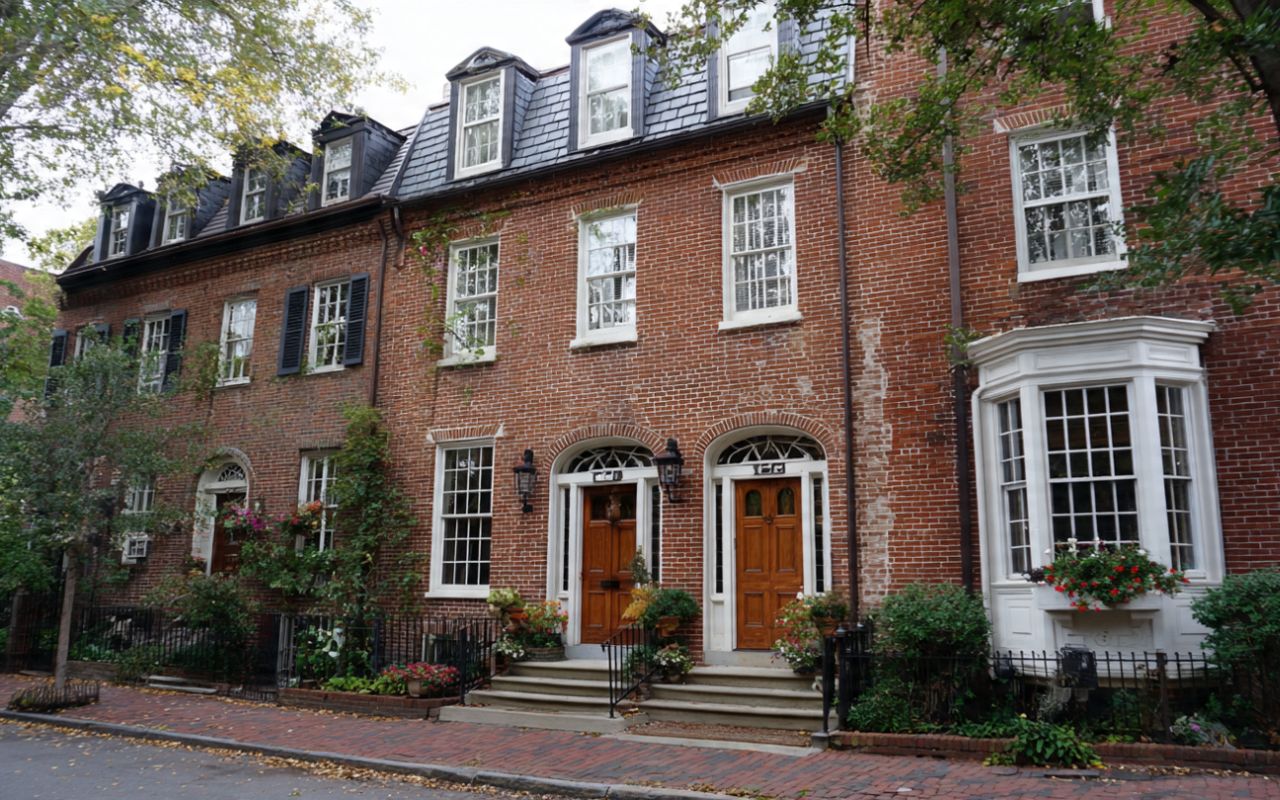
The Best Exterior Paint for Brick Homes in Philadelphia, PA must handle harsh seasons and protect older brick. Cold winters, wet springs, and hot summers all push and pull on brick and mortar. The wrong coating can trap moisture, cause peeling, and slowly damage the wall. The right paint lets walls breathe while it keeps rain out.
Breathable masonry paint, good prep, and a simple plan can keep a row house facade fresh for years. This guide explains each step in clear, friendly terms. You will see what to use, when to use it, and why it matters in our city. Follow these tips to get rich color, strong protection, and long life without guesswork.
Understand Philadelphia’s weather and brick needs
Philadelphia’s climate brings humid summers, sudden storms, and long winter freezes. Brick soaks up small amounts of water during rain and fog. When temperatures drop, that water can freeze and expand. These freeze-thaw cycles push on the brick face and mortar joints. Over time they cause flaking, cracks, and loose pieces.
Paint that blocks water vapor makes this problem worse because trapped moisture cannot escape. For this reason, you should choose coatings that let walls breathe. Also think about street shade and wind tunnels between homes, because they change how fast walls dry after storms. Key local factors include:
- South-facing walls that bake in strong summer sun.
- North walls that stay cooler and damp much longer.
- Narrow streets that block wind and slow drying after rain.
- Shared walls where one side never gets direct sunlight.
These details should guide the Best Exterior Paint for Brick Homes in Philadelphia, PA you pick. If this feels complex, you can work with professional exterior painting in Philadelphia, PA for a safe, tested plan.
Why breathable masonry paint matters
Brick acts like a sponge with tiny paths for air and water vapor. It needs a coating that keeps heavy rain out but still lets trapped damp air move through. Breathable masonry paint does this balancing job. It reduces liquid water coming from the outside and allows vapor from inside the wall to escape.
This constant movement limits blistering, peeling, and damage during freeze-thaw cycles. In a tight Philadelphia block, where row houses share walls and shade, drying can be slow, so breathability becomes even more important. Look for labels that mention “vapor-permeable” or “breathable.” These paints often use minerals or special binders that grip brick without sealing pores shut.
When breathable masonry paint goes over clean, sound brick and the right primer, it can give rich color and smooth coverage. In addition, it creates a finish that lasts through storms, sun, and cold. Because the wall can breathe, you cut down on hidden moisture problems and future repairs.
Pick between mineral and acrylic systems
Two common choices for brick are mineral silicate paints and acrylic latex masonry paints. Mineral systems bond chemically to the brick and create a very breathable, flat finish that ages well. They shine on older masonry because they handle high vapor movement and resist peeling. However, they have a more limited color range and need careful prep.
Acrylic latex masonry paints are easier to find and use, with many colors and sheens. When labeled as breathable, they allow enough vapor to pass while giving good flexibility for tiny cracks. Both options can become the Best Exterior Paint for Brick Homes in Philadelphia, PA when they match the wall condition.
- Pick mineral systems for bare, firm, historic brick that needs high breathability.
- Pick quality breathable acrylics for easier touch-ups and wider color choices.
Always test a small area first to check adhesion, color, and drying in your block’s light. For more help with colors and finishes, explore our guide on how to choose the right exterior paint.
Prepare old brick the right way
Clean, dry, and sound brick gives paint a fair start. Begin with a gentle wash using low-pressure water and a soft brush. Avoid harsh blasting or strong acids that can weaken the surface. Scrape loose paint with a putty knife and use a masonry-safe cleaner for soot, algae, or city grime. After washing, let walls dry fully.
On a shaded row house facade, drying may take extra time. Rake out loose mortar and repoint with a compatible mix so joints stay solid. Seal hairline cracks with a breathable filler. Patch deeper spalled spots so the surface looks smooth and even. Before you open any paint can, walk the wall carefully and check that it feels firm under gentle pressure.
- Wash gently and give the brick time to dry.
- Remove loose paint and weak mortar.
- Fill cracks with breathable products made for masonry.
- Mask windows, trim, and sidewalks to keep the street tidy.
Check for old coatings and sealers
Before painting, learn what is already on the wall. Splash a little water on a few test spots. If it beads and runs off, there may be a non-breathable brick sealer or glossy paint that blocks vapor. If water darkens the surface and sinks in, the brick is likely open and better suited for a breathable system.
When a hard, shiny sealer is present, sanding may not help because it sits inside the pores. In that case, follow product advice for removing it or bridging it with a vapor-permeable primer designed for tricky surfaces. Always test a small patch to see if new paint bonds well and dries without blistering. This step avoids trapping moisture behind a tight film during freeze-thaw cycles.
Prime and seal with care, not plastic
Primer is the link between brick and finish coats. Choose a primer that matches your paint type and is rated as breathable. On clean, bare brick, many mineral systems use a special primer that helps the paint bond deeply. Apply primer only to dry surfaces and follow the recommended wait times between coats.
If your wall takes on rain from a busy street or wind-driven storms, consider a breathable brick sealer based on silane or siloxane. These products repel liquid water while still allowing vapor to pass. Avoid plastic-like sealers that form a shiny, non-breathable skin, because they can trap moisture and cause peeling. With the Best Exterior Paint for Brick Homes in Philadelphia, PA and a breathable brick sealer, your walls stay healthy through changing weather.
Choose colors that suit row house facades
Color choice shapes curb appeal on tight city blocks. In Philadelphia, rows of brick homes often sit close together, so light behaves differently than in open suburbs. Warm reds, soft taupes, and cool grays can all work well with historic brick lines. Lighter colors brighten shaded streets and make small fronts feel wider and more open.
Dark accents on sills, lintels, and cornices add depth without overpowering neighbors. Test samples on both sunny and shaded sides, and view them at different times of day. Also think about how winter salt, summer dust, and fall leaves will mark the wall. A flat or low-sheen breathable masonry paint often looks natural and lets the row house facade remain the star.
- Use light tones to open up narrow or shaded streets.
- Add darker trim to highlight sills, doors, and railings.
- Match colors with nearby homes to respect the block’s style.
- Pick sheens that hide small flaws instead of shining on them.
Many Philadelphia streets are narrow, and access is tight. Plan the job for a dry stretch with mild temperatures. Whenever possible, paint in the shade to reduce lap marks and slow drying. Use quality rollers for texture and good brushes to cut along mortar lines, trim, and edges.
Two thin coats of breathable masonry paint are better than one thick coat. Keep a wet edge and work from top to bottom to avoid drips. Cover sidewalks and cars, and talk with neighbors so doors and windows can stay open without dust or spray. Watch humidity and sun in the forecast, because very damp air slows curing while strong sun can dry the surface too fast.
Handle moisture, efflorescence, and winter stress
White, powdery marks called efflorescence show that salts are moving with water through the wall. Brush them off dry with a stiff, soft-bristle brush. Fix leaks in gutters, downspouts, and caps so less water enters the brick. Let the wall dry fully before repainting or touching up painted areas.
If you see small flakes or spalling, remove loose bits and patch with a compatible mortar or filler before coating. Use breathable systems so vapor can escape after storms or snow. In winter, freeze-thaw cycles can widen tiny cracks, so check these areas in spring and seal them early. Keep ground-level splashback low by running downspouts away from sidewalks and planting beds.
Frequently Asked Questions
How do I know if my brick is ready for paint?
First, make sure the brick is dry, firm, and clean. Tap gently and listen for hollow sounds that can mean loose areas. Check for crumbling mortar, heavy efflorescence, and damp spots. After repairs and cleaning, do a small test patch of breathable paint to see how it dries and adheres.
Can I paint over an existing brick sealer?
Sometimes you can, but only with products made for sealed masonry. Start with a simple water test. If water beads strongly, a sealer is present. In that case, follow the paint maker’s directions for special primers or removal. Always test a hidden area first to avoid peeling or blistering later.
What paint finish works best on brick?
Most brick looks best with a flat or low-sheen finish. These sheens hide small flaws and keep the surface from looking plastic. High-gloss finishes can highlight bumps and repairs. A breathable masonry system in a matte look usually feels more natural on historic city walls and row houses.
How often should I repaint a brick row house facade?
The exact schedule depends on sun, rain, and product quality. Many breathable exterior systems can last a decade or more with gentle care. Check high-wear areas yearly and touch up small chips early. When color looks faded across large areas, plan for a full refresh with cleaning and light prep.
Is it safe to paint brick in winter in Philadelphia, PA?
It is usually better to avoid very cold days. Most masonry paints need temperatures above the product’s stated minimum, often around mild spring or fall levels. Avoid painting just before a freeze or heavy storm. If you must work in colder seasons, follow the label closely and allow extra drying time.
Maintain the finish and plan recoats
Once you apply the Best Exterior Paint for Brick Homes in Philadelphia, PA, steady care helps the finish last longer. Wash walls once a year with low-pressure water and a mild cleaner to remove soot and street dust. Trim plants that hold moisture against the brick and keep soil and mulch away from the base of the wall.
Inspect high-wear spots like sills, parapets, and areas near downspouts after big storms. Touch up small chips before water gets behind the film. Keep an eye on caulk around windows and doors so rain stays out of the wall system. When color begins to look dull, plan a light refresh coat before the paint fails.
Because the wall can breathe, recoating is simpler: clean, dry, spot-prime repairs, and apply a thin, even layer. If you spot large cracks, peeling, or damaged mortar, schedule a brick painting consultation in Philadelphia for expert help. With steady care, your brick home can stay strong, bright, and welcoming for many years.